- 800-435-2948
- 800-435-2948

The selection of an appropriate drill point angle for your bit should be informed by questions about your application. Yes, a hole is a hole is a hole, and while some angles are more common than others, there is no true standard drill point angle. Instead, consider what is the purpose of the hole, what type of metal are you cutting into, and what are the specifications for the finished hole?
In addition to the drill point angle, factors that can affect successful drilling include:
There are two main characteristics that define a drill point for metal. First is the included angle of the point and the second is the configuration of the point. The point configuration is a key element in the choice of drill styles for a particular job.
The most common included angles for drills are 118° and 135°. These angles are an artifact from the time when drilling was largely a manual process, and the drill bits were conventional conical shapes. Over time, tool makers learned that by grinding a conical point with a flat surface (a facet) to create a linear chisel, they could reduce the thrust required and also improve the process of cutting the metal or wood and removing the chips. If you’re drilling by hand, this is a clearly a major benefit.
Today, with advanced drilling machines, multi-faceted drill points are the norm. Not only do they require 50% less thrust, but they also generate 60% less heat than a conventional drill point. And there are a number of different configurations, each of which—when combined with a particular drill point angle—is suitable for specific jobs.
The general purpose drill points found on most jobber drills are 118° angled drills. They are typically used for cutting into soft metals such as aluminum, whereas the 135° variant is best suited for hardened materials, such as stainless steel. A 135° drill is flatter than 118°, which means that more of its cutting lips engage with the material surface sooner to begin the full metal cutting action. Check out our drill point angle chart below for what angles are optimal based on the material that is being drilled:

There are a number of drill point configurations and these may be found in both 118° and 135° variants. The different configurations are selected based on the drilling application—for example:
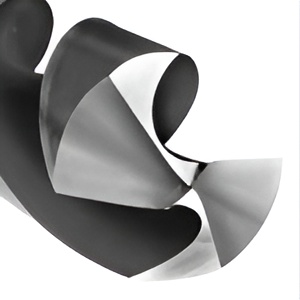 | Notched points: were developed for drilling hard alloys and have reduced drag on the chisel edge. |
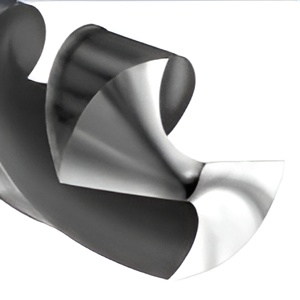 | Helical points: have an S-contoured chisel that is self-centering and cuts close to actual drill diameter. |
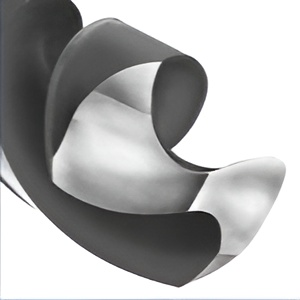 | Racon® points: have a continuously varying point angle that generates less load and less heat while cutting into the metal and have a longer usage life. However, Racon points are not self-centering and must be used with a guide bushing. |
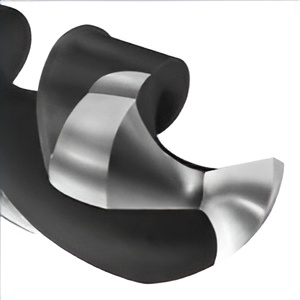 | Bickford™ points: combine the features of the Helical and Racon points—self-centering, long life, burr-free breakthrough and higher feed capacity.Nowadays, there are few excuses for not seeking and using the right point configuration for the job. Specialist companies make drill pointing equipment and have the skill to provide many other style points for tough applications. |